Visitors to Le Bonheur Reptiles and Adventures can now learn the Story of the Leather.
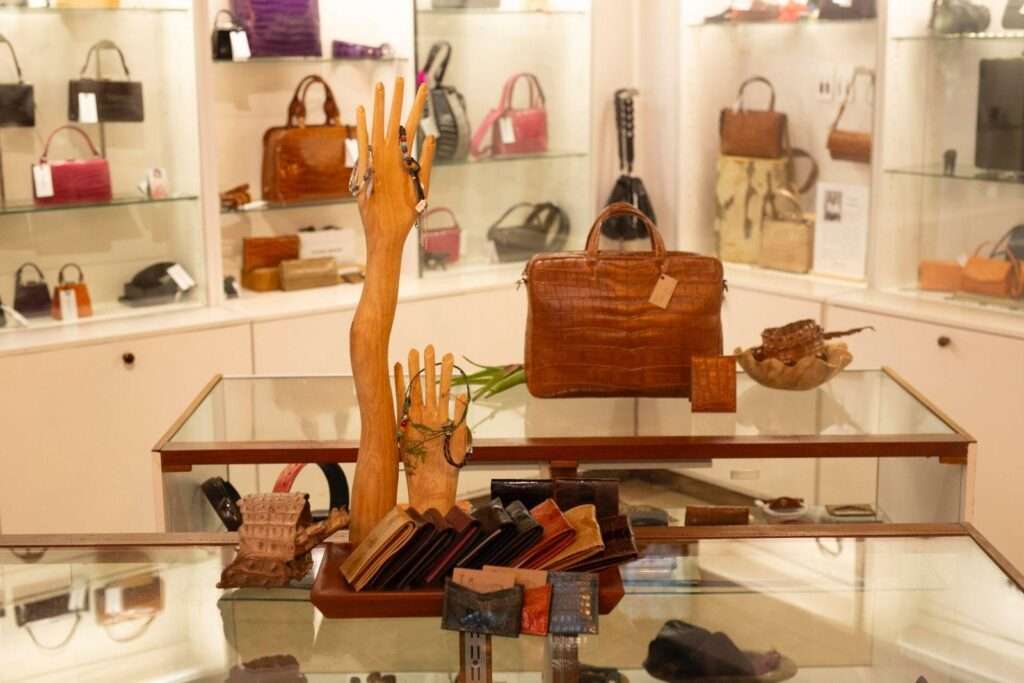
Visitors to Le Bonheur Reptiles and Adventures can now learn the Story of the Leather. We proudly relate the journey of a few brave farmers, a pioneer tanner, and showcase the craftsmanship of some of the best South African leather apparel manufacturers in our on-site gift shop collection.
Le Bonheur recognises the important conservation role of the South African crocodile-farming corps, and appreciates the regulatory bodies that help keep it compliant. We salute this industry without swerving from our primary role: to teach respect for the African Nile crocodile and other reptiles.
On Le Bonheur Farm, a mere 40 min drive from Cape Town central, a bask of 300 odd Nile crocodiles are tended to by passionate animal carers. These guides host 10 daily guided tours to visitors from all over the world, and are dedicated to caring for the reptiles till the natural end of their lives.
In our visitors center we tell the parallel stories worth telling – the contribution of licensed Nile crocodile breeders to research and economy. We tell this through the Story of the Bones, honoring research conducted by local universities on captive bred crocodiles.
We also tell the Story of the Leather. With our collection we aim to honor the many hands a well made crocodile leather article have passed through… from the watchful eye of the farmer…to the discerning eye of the tanner…to the mindful process of the design, cut and fashioning of the final item.
Each crafted leather item in the Le Bonheur collection speaks of knowledge and skills passed down generations, and your purchase of their handiwork allows these bearers to pay it forward.
If you have an appreciation for the ancient craft of exotic leather tanning and want to experience first hand the best of South Africa’s exotic leather manufacturers, our collection proudly showcases brands like Hans-Peter Winklmayr, Cape Cobra and a number of other unique crafting voices.
Our founder Jurie Prins, a life stock farmer born in Namibia, first introduced Nile Crocodiles to a winelands farm in 1980, after being awarded a CITES breeding licenses from Cape Nature. As a direct result of this strategic foresight, the African Nile crocodile’s numbers have been significantly improved by commercial farming, de-listing its status from highly endangered to least critical.
40 years later, we have come full circle on Le Bonheur: whilst honoring the legacy of our founder and other brave farmers, who shared their knowledge, and made great strides transcending Southern African countries (the natural habitat of the Nile crocodile spans many African countries), we find ourselves motivated by the educational role of our park, offering visitors the rare opportunity to view and learn more about 300 odd Nile crocodiles and other reptiles.